





Dear fans of graphic literature and criminal history, allow me to guide you through one of the most fascinating works of our contemporary era. In the dark recesses of Victorian London, where damp cobblestones still echo with the footsteps of history, Alan Moore invites us on a masterful exploration of one of the most enigmatic mysteries in modern criminology.
The alleyways of Whitechapel, stage of unspeakable horror, are transformed under Moore's pen into a genuine hermeneutic laboratory. For "From Hell" is not simply a story about Jack the Ripper, but a meticulous dissection of the social, political and psychoanalytical structures of Victorian society. Alan Moore, this titan of graphic storytelling, presents here a work of remarkable epistemological complexity.
From Hell: A Cartography of the Victorian Collective Unconscious
In this narrative symphony of extraordinary richness, Moore transcends the conventions of traditional crime fiction to offer us a genuine archaeology of modern urban violence. The dark arteries of Whitechapel become a distorted mirror of a society in full transformation, where every shadow conceals not only a threat, but also a metaphor for social alienation.

Critical Reception: A Complex Academic Dialogue
The critical reception of this literary monument reveals the polysemic richness of Moore's work. Contemporary scholars are divided between those who celebrate the author's narrative genius and his capacity to weave a fascinatingly complex story, and those who question the historical accuracy of certain factual elements. This dialectical tension between historical truth and creative freedom constitutes precisely one of the most stimulating aspects of this revolutionary graphic novel.
The Paradigmatic Legacy of "From Hell" in Graphic Literature
Far beyond its status as a remarkable work, "From Hell" stands as a genuine aesthetic manifesto that has redefined the expressive possibilities of the graphic medium. This monumental creation has not only transformed our understanding of the narrative potential of comics, but has also established new paradigms in the historiographic approach to graphic fiction.
Alan Moore's Archaeological Meticulousness: An Exemplary Topographic Reconstruction
Moore's documentary approach amounts to a genuine archival obsession. His reconstruction of London's urban landscape and its inhabitants demonstrates exceptional ethnographic rigor. This near-scientific precision in recreating the social and spatial environment proves that creative genius can perfectly accommodate a rigorous academic methodology.

Discover V for Vendetta: A Cry for Freedom
The Film Adaptation: Creative Transmediality

The cinematic transposition of this literary masterpiece perfectly illustrates the inherent challenges of transmediality. Johnny Depp, in his portrayal of Inspector Frederick Abberline, brings an unprecedented performative dimension to this historical figure. Although the film favors a more conventionally procedural approach, centering its plot on Scotland Yard's investigations, the art direction manages to preserve the philosophical essence of Moore's vision, creating a creative dialogue between two distinct mediums.
Scotland Yard: An Institutional Ethnography of Investigation
Moore's analysis of Scotland Yard's investigative methods constitutes a genuine institutional ethnography. The errors, approximations, and bureaucratic dysfunctions become so many revelations of the epistemological limits of the Victorian judicial apparatus when confronted with an emerging modern criminality.

The Semiology of Violence: Decoding the Whitechapel Crimes
The murders committed in the labyrinthine streets of Whitechapel transcend their purely criminal dimension to become a complex system of meaning. Moore deploys a genuine hermeneutics of urban violence, meticulously analyzing behavioral patterns, psychological motivations, and the sociological implications of these acts. This semiological approach transforms each crime into a text to be deciphered, revealing the underlying tensions of a society in full transformation.
William Gull: The Royal Physician Hypothesis as a Narrative Paradigm

The bold hypothesis developed by Moore, naming William Gull, Queen Victoria's personal physician, as the mysterious Jack the Ripper, constitutes a true narrative tour de force. This theory is not mere sensationalist speculation, but fits within a sophisticated structural logic that interrogates the relationships between power, medical knowledge, and institutional violence. By implicating the monarchy itself in this criminal tragedy, Moore establishes a scathing critique of the structures of domination in the Victorian era.
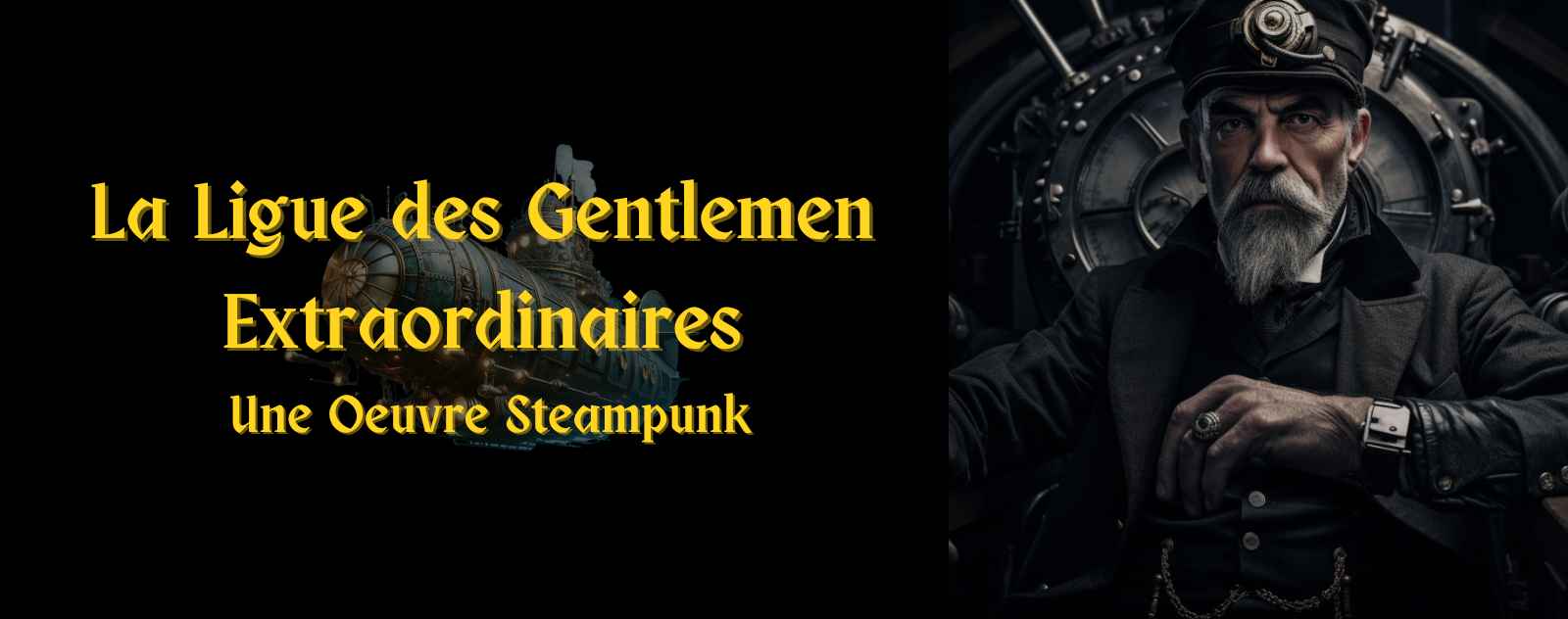
The League of Extraordinary Gentlemen: A Steampunk Work
The Dynastic Ramifications: When the Crown Meets Crime
Within the complex ecosystem of criminological theories surrounding the Ripper case, one particularly provocative hypothesis emerges: that potentially implicating a member of the royal lineage. Although Moore does not directly explore this angle in his main narrative, this speculation considerably enriches the narrative architecture of his work. It raises fundamental questions about the potential dysfunctions of the official investigation and the political implications that such a revelation might have generated in the social context of the time.
The Cultural Impact: Jack the Ripper as a Modern Archetype

Jack the Ripper has transcended his status as a mere historical criminal to become a genuine archetype of the modern collective unconscious, a figure that also resonates in Steampunk. This mythical figure now permeates our entire contemporary cultural production, from television productions to conceptual art. "From Hell" actively participates in this mythification, consolidating Jack the Ripper's position as a paradigmatic figure of criminal modernity and its artistic representations.
Frequently Asked Questions: An Academic Dialogue

What is the main conceptual divergence between the graphic novel and its film adaptation?
The film adaptation, orchestrated around Johnny Depp's performance as Inspector Fred Abberline, favors a procedural approach centered on the mechanisms of police investigation. The graphic novel, on the other hand, deploys a far more in-depth psychological and sociological exploration, analyzing the mental structures of the alleged criminal and dissecting the complexities of London's social stratification, notably through the study of the character of William Gull.
Does Alan Moore offer a definitive resolution to the Jack the Ripper enigma?
Moore deliberately adopts an ambiguous approach, refusing to definitively close the historical mystery. Although he develops a sophisticated theory naming William Gull as the primary suspect, he intentionally preserves the fundamental opacity of the case, transforming this uncertainty into a dramaturgical device and an epistemological questioning of the very nature of historical truth.
Is this work suitable for all audiences?
"From Hell" contains explicit graphic content and addresses themes of considerable conceptual maturity, including depictions of violence and complex psychological analyses. This work is therefore intended exclusively for an adult readership capable of engaging with its philosophical and aesthetic dimensions.
Does Johnny Depp's portrayal respect the original characterization of Abberline?
Johnny Depp develops a personal interpretation of the character of Fred Abberline that, while departing from certain aspects of the original graphic depiction, manages to capture the essence of the character. This cinematic adaptation naturally requires creative adjustments to suit the constraints and possibilities of the film medium.
How much historical truth is there in Moore's narrative?
"From Hell" rests on a solid documentary foundation, incorporating historically attested characters and events, such as the Whitechapel murders and the figure of Inspector Frederick Abberline. Nevertheless, Moore fully exercises his creative freedom to dramaturgically enrich his story and deepen the psychology of his characters, creating a sophisticated balance between historical rigor and literary invention.
What is Eddie Campbell's specific contribution to this creation?
Eddie Campbell, the graphic collaborator on this monumental work, develops a black-and-white visual language of remarkable expressiveness. His artistic style, characterized by a deliberately oppressive atmosphere and documentary precision, constitutes a narrative element in its own right, considerably enriching the reading experience and actively participating in the construction of meaning.

"From Hell," Alan Moore's masterful interpretation of Jack the Ripper, brilliantly transcends the conventional limits of criminological narrative to transform itself into a multidimensional exploration of fin-de-siècle London society. By combining historical rigor, theoretical speculation and narrative genius — notably through the revolutionary hypothesis implicating William Gull, physician to Queen Victoria — Moore delivers a work of striking intellectual complexity that masterfully redefines the expressive possibilities of the graphic novel.
This creation does not merely revisit the Whitechapel crimes from a purely eventful perspective; it also constitutes a scathing sociological critique of the structural inequalities of Victorian England and an institutional analysis of Scotland Yard's methodological limitations. The work pays a poignant tribute to the victims too often obscured by official history, while questioning the shadows and mysteries that continue to fuel our contemporary fascination with the enigma of Jack the Ripper.