


The Steampunk universe and Victorian England are so deeply intertwined that it can sometimes be hard to tell them apart. With Christmas approaching, we wanted to share nine surprising things about this period that shaped so much of what we celebrate today.
1- Victorian Christmas traditions took shape during the Industrial Revolution in the United Kingdom, under the reign of Queen Victoria, marking a defining chapter in British history.
It's hard to imagine today, but at the start of the 19th century, Christmas was barely celebrated in Great Britain. Many businesses — especially in the railway and inventions sectors so characteristic of the Victorian era — didn't even treat it as a public holiday. Yet by the end of that era, shaped by the rise of the middle class and the emergence of the labor movement, Christmas had become the nation's greatest annual celebration. It took the cultural form we know today, thanks in part to figures like Charles Dickens. The transformation happened quickly and came from every sector of Victorian society, including architecture and the fashion of the time.
2- Queen Victoria's Influence on Christmas in the United Kingdom.

Queen Victoria, iconic figure of the United Kingdom and the British Empire, played a crucial role in transforming Christmas celebrations. Her reign, which coincided with the Industrial Revolution, witnessed the emergence of many traditions and inventions that became pillars of the holiday. It was under her influence, and that of her husband Prince Albert, that the Christmas tree became a central feature of the festivities. Their family, representative of the rising middle class, helped popularize this tradition in Britain and beyond. The Victorian style, with its blend of elegance and grandeur, also left its mark on the architecture and fashion of the era — elements reflected in Christmas decorations and costumes. Queen Victoria thus reigned not only over an empire, but over the heart of the Christmas traditions that endure to this day.
Soon, every home in Great Britain had a tree adorned with candles, sweets, fruit, homemade decorations, and small gifts.
Alexandrina Victoria of Kent: The Origins of an Era
Alexandrina Victoria of Kent, better known as Queen Victoria, was an iconic figure of the United Kingdom and the British Empire. Born in 1819, she came to the throne at a time of prosperity and Industrial Revolution. Her reign not only shaped British history and culture, but also had a significant impact on Victorian society and the middle class of the era. She is often associated with major advances such as the railway and various inventions that shaped Great Britain. Her influence extended well beyond England's borders, touching the entire United Kingdom and even the British Empire.

3- Literature as a carrier of the Christmas spirit.

Although Charles Dickens did not invent the Victorian Christmas, his book A Christmas Carol is credited with helping to popularize and spread Christmas traditions. His literary work is steeped in misery and injustice. Social problems are among his essential themes. The message he sends his readers is grounded in a morality built around family, charity, goodwill, peace, and happiness. His values capture the spirit of Victorian Christmas, and remain an integral part of the Christmas we celebrate today — even if its commercial side increasingly distorts the festive season.
Many Christmas tales and stories were modernized and popularized during this period, making the Victorian era the cradle and benchmark of the Christmas season. It was much later that America would in turn shape the holiday with the arrival of the Santa Claus we know today, in his Coca-Cola colors...
4- The Invention of the Christmas Card.
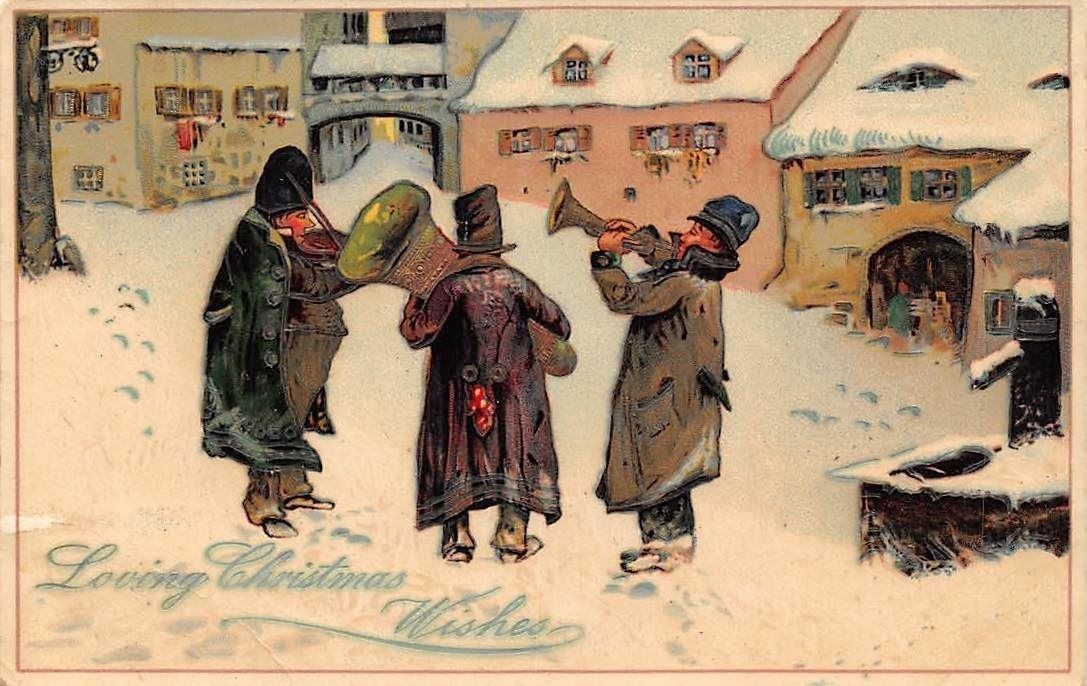
In 1843, Henry Cole commissioned an artist to design a card for Christmas. The illustration showed a group of people around a table with a Christmas message. Previously used for Valentine's Day, the Victorians extended the custom to Christmas. While valentines were mainly reserved for the young and those in love, Christmas cards were sent to everyone, all around the world. During the golden age, they became increasingly elaborate.
At a shilling each, these cards were expensive for ordinary English people and were not immediately accessible. However, the sentiment spread, and many children — including Queen Victoria's own — were encouraged to make their own Christmas cards. In the age of industrialization, color printing technology advanced rapidly and the cost of producing cards fell significantly.
With the introduction of the half-penny postal rate, the Christmas card industry took off. By the 1880s, sending cards had become enormously popular, creating a lucrative industry that produced 11.5 million cards in 1880 alone. Many households kept albums to preserve their favorite greeting cards, helping to save them for future generations. The commercialization of Christmas was well under way.
5- Christmas Carols, Merry Christmas!

The Victorian era also revived the age-old custom of singing Christmas carols to celebrate the season, notably breathing new life into the 400-year-old song "The First Noel." Not only did people go door to door to sing for friends and neighbors, but they also enjoyed carols in barbershops and tea rooms, at home, or at beautiful candlelit celebrations in neighborhood chapels. Wherever there were songs, there were beautifully illustrated sheet music sheets with Christmas themes, right into the early 1900s. These are not only beautiful — they are highly sought after by collectors today.
6- The Spread of Christmas Decorations and Lights.

Decorating the home at Christmas also became a more elaborate affair. The medieval tradition of using conifers continued, but the style and placement of these decorations grew more important. The old custom of simply adorning walls and windows with branches and twigs fell out of fashion. Uniformity, order, and elegance were encouraged. There were instructions on how to make elaborate synthetic decorations for those living in cities. In 1881, Cassell's Family Magazine issued strict guidelines to the lady of the house: "To create a general feeling of pleasure, everything depends on the surroundings... It is worth taking a little trouble over the decoration."
7- Christmas Gifts in the Victorian Era.

Traditionally, gifts were given at New Year, but they gradually shifted as Christmas grew more important to the Victorians. At first, gifts were rather modest — fruit, nuts, sweets, and small handmade trinkets. These were typically hung on the Christmas tree. However, as gift-giving became more central to the celebration and gifts grew larger and shop-bought, they moved to under the tree.
8- Preparing a Festive Feast.
The Christmas feast has roots stretching back before the Middle Ages, but it was during the Victorian era that the Christmas dinner we now associate with the holiday began to take shape. Looking at the earliest Victorian recipes shows that mince pies were originally made with meat, a tradition dating back to Tudor times. However, during the 19th century, the composition of this festive dish underwent a revolution. Meatless mixes began gaining popularity among some of the upper echelons of society and evolved into the mince pies we know today.

Roast turkey also has its origins in Victorian Britain. Previously, other roasted meats such as beef and goose were at the center of the Christmas meal. Turkey was introduced by the wealthier sections of the community in the 19th century, but its perfect size for a middle-class family gathering made it the dominant dish by the early 20th century.
As carp was a German specialty at the time, Victorian families often served carp on special porcelain sets decorated with fish motifs during Christmas feasts. Many households also prepared stew, ham, pickles, several types of potatoes, oyster stuffing, jams, jellies, and of course the indispensable Christmas pudding. This isn't so different from some of the dishes we enjoy during the holiday season today.
9- The Invention of Christmas Crackers in London.
Another commercial Christmas invention created under the Victorian Empire in 1848 was the mass production of confectionery. Tom Smith invented a bold new way to sell sweets. Inspired by a trip to Paris where he saw bonbons (sugar-coated almonds wrapped in paper twists), he came up with the idea for the Christmas cracker. A simple package filled with sweets that snaps apart when pulled. By the end of the Victorian era, the sweets had been replaced with small gifts and paper hats. They remained in this form for a long time as an essential part of a traditional Christmas.

The Victorian era transformed the idea of Christmas so that it became centered around the family. The preparations, the festive meal, the decorations, the gifts, the entertainment, and the board games were all essential to the celebration and meant to be shared by the whole family.
There you have it, fellow steampunks — steampunk draws inspiration from this Christmas we might call vintage, with its emphasis on the fantastical and the exuberant. We'll be publishing an article soon on Steampunk Christmas, but the foundations are already right here.
See you soon for another article on the fascinating world of steampunk.