


You think you know gothic style, gothic architecture, and gothic art when you see them? Think again, dear readers! The gothic transcends mere appearances. It is not simply a matter of architecture or fashion — it is a genuine time machine, a mechanical philosophy of the soul! Beyond the fact that we love to blend the gothic and steampunk, one must acknowledge that this ancient movement possesses gears far older than our beloved steampunk universe.
Key Points
🕯️ Gothic philosophy: Blending romanticism and rebellion against materialism, championing emotion and individualism.
🕍 Gothic architecture: Flying buttresses, vaults, stained glass windows, detailed sculptures.
📚 Gothic literature: Dark themes, supernatural elements, tragic protagonists.
🎸 Gothic music: An evolution of punk rock with subgenres such as darkwave, deathrock, and gothic metal.
👗 Gothic fashion: Dark colours, layering, rich fabrics, and dramatic accessories.
🖼️ Gothic art: Scenes of death and decay, mythical creatures such as dragons and gargoyles.
🏰 Gothic cathedrals: Places of dark and mystical worship, often dangerous due to the darkness within.
👹 Gargoyles: Rainwater drains, designed to frighten evil spirits with their grotesque appearance.
🕯️ Gothic script: An alphabetic style from the Middle Ages — both aesthetic and economical in terms of space.
🎥 Gothic films: Eerie atmosphere, dark settings, themes of death, the supernatural, and passion.
Read on to discover all the secrets of this aesthetic machinery!
Definition and Philosophy of the Gothic Style
At the end of the 18th century, like a clockwork mechanism suddenly releasing its springs, the Romantics rebelled against a world where logic and materialism had overtaken emotion. Imagine, dear readers, a steam engine of feelings! They set themselves the mission of restoring emotions to their throne, of championing passion above all else, and of elevating individual expression to a social priority. In truth, they lit the spark that gave birth to the gothic culture we know today!

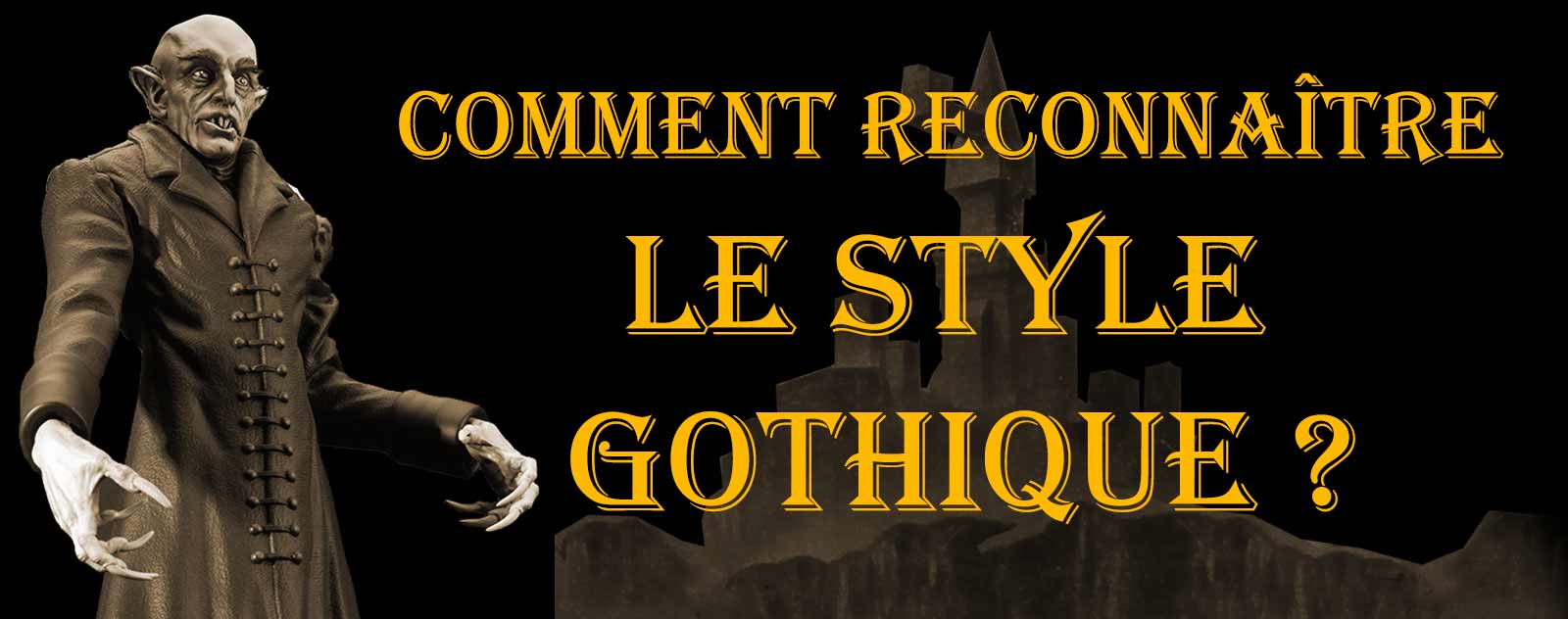
Step into the sinister world of gothic atmosphere and let yourself be seduced by its mysterious charm! The underground gothic movement operates like a complex cultural machine, blending musical genres, artistic projects, fashion aesthetics, and a particular way of life. Whether strolling through eerie graveyards or partying in catacombs, admiring dark artworks by the likes of Baudelaire and Edgar Allan Poe, or cinematic marvels such as Nosferatu by Fritz Lang — this alternative culture draws inspiration from medieval folklore and timeless legends like vampires...

The gothic style offers an escape from reality, like a dimensional portal. The black clothing and accessories worn by goths represent a mysterious and dark dimension that proclaims the beauty of being isolated and misunderstood. Music serves as a refuge for those who live passionately through their tormented love lives and express themselves freely in all forms — extravagant looks or spontaneous provocations! Because at heart, appearance is another way of showing who you are, without fear or judgement.

Rebelling against the status quo, gothic culture values individualism and freedom like the pistons of a revolutionary engine. People might think it's only about a look, or purely about musical taste — but they're wrong on both counts! Gothic is so much more than that: at the heart of this movement lies a style and an atmosphere... that sets it apart from everything else. So if you want to be authentically "gothic," immersion in the gothic arts is essential... but not sufficient in itself.
For goths, fear is not something to be avoided — it must be embraced and celebrated as a precious gear in the machinery of existence. They find what society might deem "bad" or unsightly to be uniquely beautiful, giving life a meaning that is often hidden. Death, chaos, illness — all of this forms part of an atmosphere in which music plays powerfully upon the emotions of its listeners.

Belonging to the gothic movement does not simply mean wearing certain clothes — it is a state of mind, a mental machine! People within this culture can listen to anything, from black metal to rock and classical music alike, all while appreciating their punk roots! It is not merely about being fashionable; there is something deeper beneath the surface, like the hidden gears of a complex watch!
Gothic Architecture, or the Origins of Gothic Art
Gothic architecture is characterised by its flying buttresses, pointed arches, and ribbed vaults

Known as Opus Francigenum, this extraordinarily complex architectural form — a true machine of stone evolved from Romanesque architecture — originated in the Kingdom of France, specifically in Île-de-France, approximately 900 years ago. The builders of that era invented highly advanced construction techniques, such as the use of flying buttresses and counterforces to support very tall and light structures across Western Europe — true cathedral engineering!
Gothic art expresses itself through highly detailed decorations, such as sculptures and stained glass windows, to tell religious and historical stories. Gothic cathedrals, those impressive monuments of architecture, still function today as time machines visited by thousands of people from around the world.
Gothic cathedrals are often very dark, with stained glass windows, flying buttresses, and little lighting

Gothic cathedrals are often quite dark, with stained glass and little light — an atmosphere orchestrated with the precision of a clockwork mechanism! This was intentional, as the cathedral was meant to be a place of worship and contemplation. The darkness heightens the sense of mystery and awe that worshippers feel upon entering, like a traveller stepping into an emotion machine.
This darkness was designed to inspire a sense of reverence and awe in those who entered the cathedral. However, it also made it difficult for people to see what was happening around them. As a result, cathedrals were often rather dangerous places, as people could easily trip and fall in this machinery of stone and shadow.
The gargoyles of gothic churches with their fearsome appearance
Gargoyles are a common feature of gothic architecture and gothic cathedrals, and they often have a frightening appearance. The word "gargoyle" derives from "gorge" or "throat." Indeed, the earliest gargoyles were carved in the form of a dragon with a long neck and open mouth — true mechanical creatures spouting water!
The purpose of gargoyles was to serve as drains for rainwater, but over time they became more ornate and were used as decorations. Many believe that gargoyles were originally intended to frighten away evil spirits, and their grotesque appearance certainly achieves that goal. Today, gargoyles remain a popular decorative element in gothic architecture, and their sinister presence continues to fascinate onlookers like stone sentinels.

The walls of gothic cathedrals are often covered in intricate sculptures
The interior of a gothic cathedral functions like a spiritual machine divided into three main sections. The nave is the long central section where parishioners worship, while the choir is the section reserved for the clergy and choirs. The transept is the short section that crosses the nave at its midpoint, forming the shape of a cross.
Gothic cathedrals are characterised by flying buttresses, tall arches leading up to vaults or vaulted ceilings. These flying buttresses are often supported by elaborate pillars and decorated with intricate sculptures. The walls of gothic cathedrals are also covered with complex sculptures, tapestries, and stained glass windows. Walking through a gothic cathedral can therefore be an inspiring and awe-inspiring experience, like navigating a stone library of Romanesque style.
Gothic Art Since the 13th Century

Gothic art — what a fascinating style! For those who need a brief definition, dear readers, this term describes a French artistic style that flourished from the mid-12th century until the beginning of the Renaissance. It is an adjective used to describe works of art influenced by the social, cultural, and technical conditions of the era — like a complex cultural mechanism that evolved over the centuries.
The most important aspects of gothic art are its influences and techniques, functioning like the gears of an artistic clock. The artists of the time were highly skilled at creating sculptures and paintings that reflected their world. Stained glass windows, stone sculptures, and detailed ornaments were all key elements of gothic art.
In fact, it has never been more fashionable than today, given the dark times we are living through
You can even spot gothic elements on the menus of certain restaurants... So don't hesitate to dive into gothic art if you want to stay current while learning the history of this fascinating art form, like discovering the mechanisms of a time machine!
Gothic art — and not just architecture — often features scenes of death and decay, along with images of dark and mysterious creatures such as dragons and gargoyles. The gothic style took shape during the Middle Ages, a time when many people feared the dark and were superstitious about what might lurk in the shadows.

As the dust of Protestant England settled after its break from Catholicism in the 1700s, something remarkable began to emerge — an extraordinary curiosity for all things medieval, like a nostalgia mechanism restarting! But it was not a true return; rather, people found beauty and comfort among the decaying ruins of what remained! This love affair between English culture and gothic remnants allowed them to let their imagination run free without making ideological statements contrary to Enlightenment thinking. These are the early stirrings of the Victorian era, which would reach its full expression during the mourning period of Queen Victoria.
How to Recognise Gothic Literature?
Gothic literature is characterised by a number of elements — like a complex narrative mechanism — including dark themes, supernatural elements, and tragic protagonists. Gothic novels often explore the darker side of human nature, addressing themes such as death, madness, and evil. The supernatural is also a common element of the gothic style, with ghosts, vampires, and witches frequently appearing like phantasmal gears in the narrative machinery.

Automata, gargoyles, and gothic arcades made a grand comeback in England during the 18th century, like a time machine set in motion once more! As an antidote to the classical architecture, humanism, and science that dominated the era, people once again turned to religious and medieval narratives, as well as to legends of old — giving rise to a gothic revival rooted in the Middle Ages, arguably one of the earliest artistic and cultural movements in history.
Writing and Poetry in the Gothic Style

The writing style used at the end of the Middle Ages has a gothic appearance — a highly aesthetic alphabetic script used by a select few such as monks or rare scholars, true craftsmen of writing! This style of writing developed in Northern Europe during the 11th century and gradually spread across the continent like a scribal machine. Gothic script grew increasingly popular due to its aesthetic appeal and because it allowed more text to fit on a page.
Gothic poetry evokes an imaginary realm of seductive and bewitching beauty — a sublime blend of the beautiful and the unsettling, like a sophisticated emotional mechanism. A place where "beauty" is shaped into something irrational and enchanting, often with voluptuous results (think Dracula!). Gothic literature can give traditional beauty a very particular twist by elevating things to a mystical, unsettling, and timeless level.
Gothic Novels to Read
- Dracula by Bram Stoker is a classic that has captivated readers for generations, functioning like a perfectly oiled literary machine! It is the original vampire story, and it remains just as gripping today as it was when first published over a century ago. If you haven't yet taken the time to read it, you've missed one of the great monuments of modern literature about creatures of the night!
- Frankenstein by Mary Shelley is a timeless classic of gothic horror that continues to fascinate students and readers around the world. The moral tale of a mad scientist playing God — daring to create sentient life and then facing the moral consequences of his actions — functions like a complex philosophical machine!
- The Picture of Dorian Gray by Oscar Wilde is a classic novel that remains one of the most iconic works in literature. Narrated by a gentleman obsessed with beauty, the novel tells the story of an immortal man whose portrait takes on his ageing appearance to represent his guilt and depravity — like a mechanical mirror of the soul!
We now arrive at the modern era of gothic art, which has found expression through music and cinema — new emotion machines!
How to Recognise Gothic Music?

Gothic music derived from punk is a form of alternative rock that emerged in the United Kingdom in the early 1980s, like a revolutionary sonic machine! Gothic music has evolved over time, and today there are several subgenres and styles of gothic music, each functioning as a particular gear in this great musical machinery:
- Darkwave: Darker electronic music, often featuring heavily synthesised sounds and distorted vocals — one of the first forms to distinguish itself from punk in the 1970s.
- Deathrock: A combination of punk rock, post-punk, and music inspired by 1980s horror film soundtracks.
- Gothic metal: A blend of metal music and gothic elements such as dark romanticism, horror film soundtracks, and classical music.
- EBM (Electronic Body Music): A style of electronic dance music that incorporates elements from industrial, gothic, and synthpop genres.
The boundaries between these styles are fluid and ever-shifting, so some bands will find themselves in several categories at once — like versatile gears! Here are three gothic bands worth listening to:
- Type O Negative: The band was formed in Brooklyn, New York, in 1989 by singer and bassist Peter Steele, functioning as a dark and powerful musical machine. The band's debut album, Slow, Deep and Hard, was released in 1991 to mixed reviews but has since become a cult classic.
- Siouxsie and the Banshees: With their 1982 album A Kiss in the Dreamhouse, they produced an eclectic blend of post-punk and gothic rock that incorporated elements of jazz and funk. The band is considered a pioneer of the gothic subculture, infusing it with a heady mix of decadence and darkness.
- The Cure: Formed in Crawley, West Sussex, in 1976. The band functions like a musical time machine, with singer and primary songwriter Robert Smith as the only constant member. As a gothic rock band, The Cure achieved mainstream success in the 1980s starting with the album Disintegration.
How to Recognise a Gothic Film?
Gothic films function as genuine thrill machines, dear steampunks! They can be recognised by several well-oiled mechanical characteristics:
- There is generally an atmosphere of dread or horror in gothic films, which often feature castles, graveyards, and other strange locations as backdrops. The settings must be dark and gloomy — like nightmare machines!
- Gothic films are often associated with themes such as death, fate, the supernatural, and religion. Characters tend to be troubled, often harbouring dark secrets and a mysterious past.
- Gothic films frequently contain elements of romance or passion, as well as tension and fear. They are generally steeped in suspense, with unexpected twists and surprises throughout — like the unpredictable gears of a complex clock.
As with music, here are three recent films we enjoy — though there are many more! You can check out our article on the best Gothic Films if you'd like to explore further:
- Interview with the Vampire (1994) is a horror film directed by Neil Jordan, based on Anne Rice's bestselling novel of the same name. The story follows Louis (Brad Pitt), a Louisiana plantation owner in the 18th century, who is turned into a vampire by Lestat (Tom Cruise) — a true immortality machine!
- Crimson Peak (2015) is a horror film directed and co-written by Guillermo del Toro. Set in late 19th-century Victorian England, it follows Edith Cushing, a young author who discovers that her mysterious new husband, Sir Thomas Sharpe, is not what he seems.
- Sleepy Hollow (1999) is a compilation of two classic American horror stories, directed by Tim Burton. The film follows Ichabod Crane (Johnny Depp) as he attempts to solve a supernatural mystery in a suitably gloomy small New England town — a true detective of the strange!
How to Recognise Gothic Fashion and Gothic Clothing?

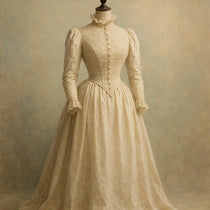
Gothic style fashion draws inspiration from creatures of the night such as vampires and demons, functioning as a shadowy sartorial machine! It is characterised by dark colours, dramatic silhouettes, and an overall look that is both mysterious and alluring.
If you're interested in gothic fashion, dear readers, you can find inspiration in our other article on Women's Gothic Style. There are a few key elements to look for — like aesthetic gears! First, gothic clothing often features rich fabrics such as velvet or satin. These fabrics are frequently adorned with lace or other decorative details, like the ornaments of a precious machine.

Another key element of gothic style is the use of layering — like an aesthetic stratification mechanism. This can involve combining different types of clothing, such as a dress over a blouse or a skirt over leggings. By layering different pieces, you can create a look that is both unique and eye-catching, like assembling the parts of a customised clock!
Finally, don't forget accessories! A belt with a large buckle, statement jewellery, or even a pair of knee-high boots can all contribute to giving your look a gothic touch. With these tips in mind, you'll easily recognise and choose your gothic-style clothing by starting from a theme or inspiration drawn from a particular film or creature.
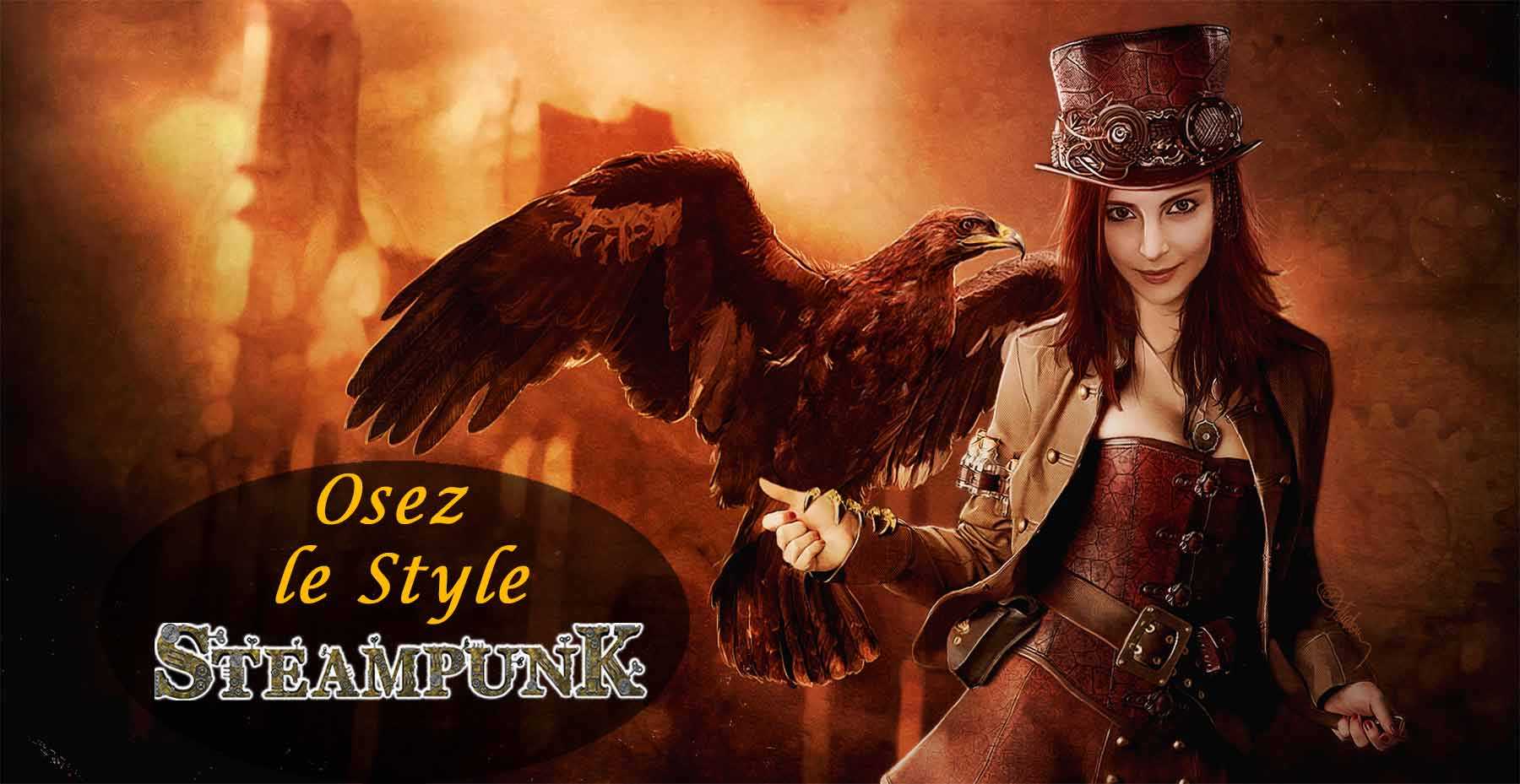
The Gothic Style is a unique and fascinating case that has been used for centuries in the arts — from the Middle Ages to the present day, functioning as a cultural time machine! From cathedrals to today's music and cinema, its themes are of course still very widely employed.
You can find all of this influence in our other blog articles and visit the shop to choose gothic-style clothing and accessories that are simply irresistible! Feel free to also explore our steampunk clothing for women and our steampunk accessories to create your own synthesis of these two fascinating worlds.
Because remember, dear steampunks — in the gothic universe as in steampunk, we don't simply wear clothes: we don them as manifestos of mechanical beauty and dark elegance!
Sources and References
- Historical documentation of medieval gothic architecture
- Literary archives of the French Romantic movement
- Studies on the evolution of contemporary gothic music
- Cinematic analyses of the modern gothic genre
- History of gothic fashion and costume
Eugénie Vaporette
Curatorial consultant in steampunk and gothic aesthetics
Graduate in the history of Victorian technologies